SANAE x Design doha
Traces of the Desert Light is an exploration of transformation, sensory memory, and the intimate dialogue between material and architectural space. It is shaped by the distinctive luminosity of Doha, where light operates as both an elemental force and a cultural marker.
Responding to the architectural setting of MIHAD Gallery in Msheireb, the exhibition engages the space’s unique spatial temperament. The work choreographs moments where light becomes a sculptor, revealing textures and altering perceptions, allowing shifts in brightness and shadow to articulate new readings of form and space.
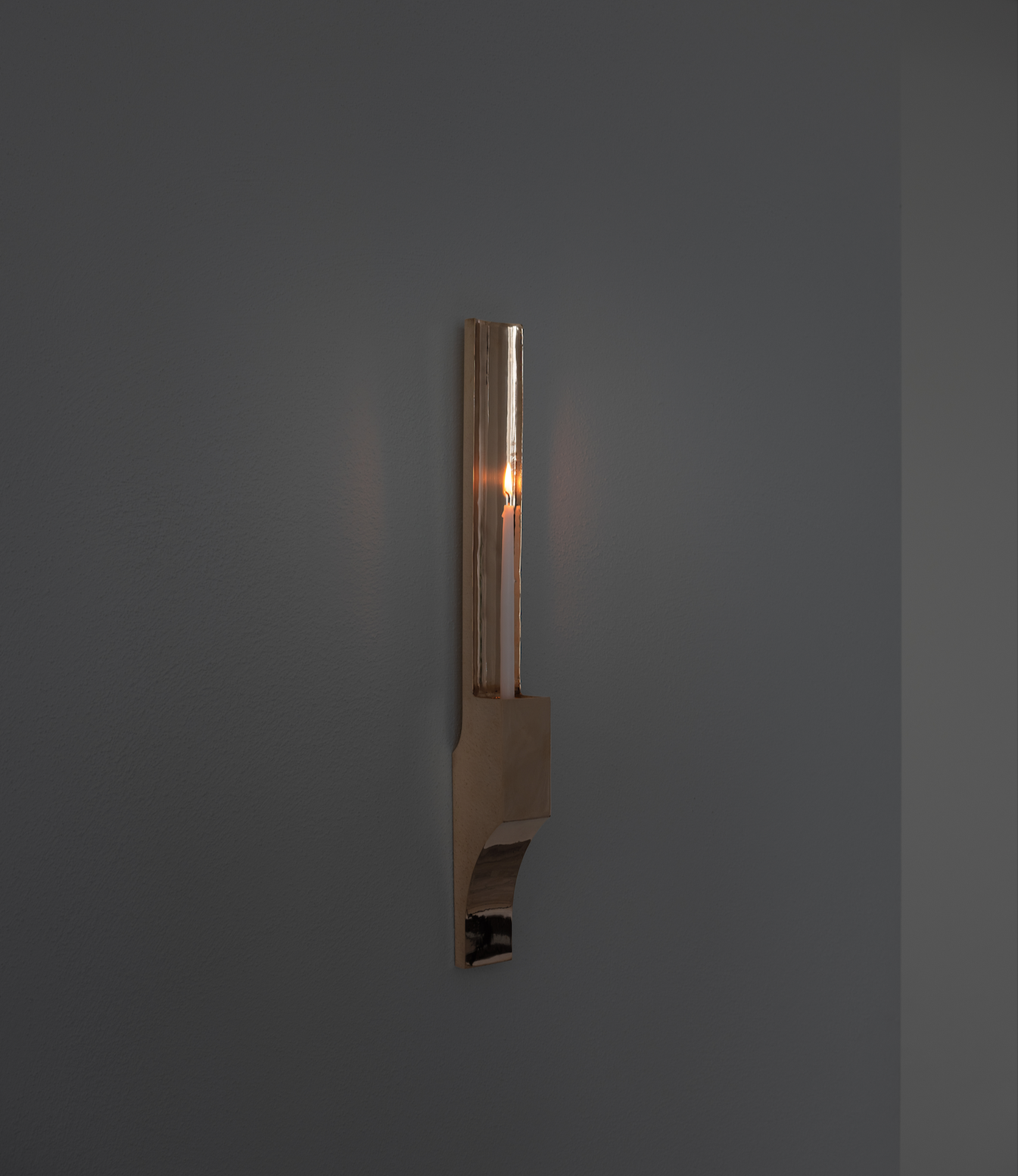
Through quiet, site-responsive interventions, the project invites visitors to experience how material, luminosity, and architectural rhythm converge to shape presence, and the felt memory of place.
Set within Mshereib’s serene architecture, Traces of the Desert Light unfolds as a meditative spatial composition : an environment where objects and light converse rather than compete. The presentation seeks harmony rather than spectacle, allowing visitors to experience design as atmosphere, rhythm, and presence.
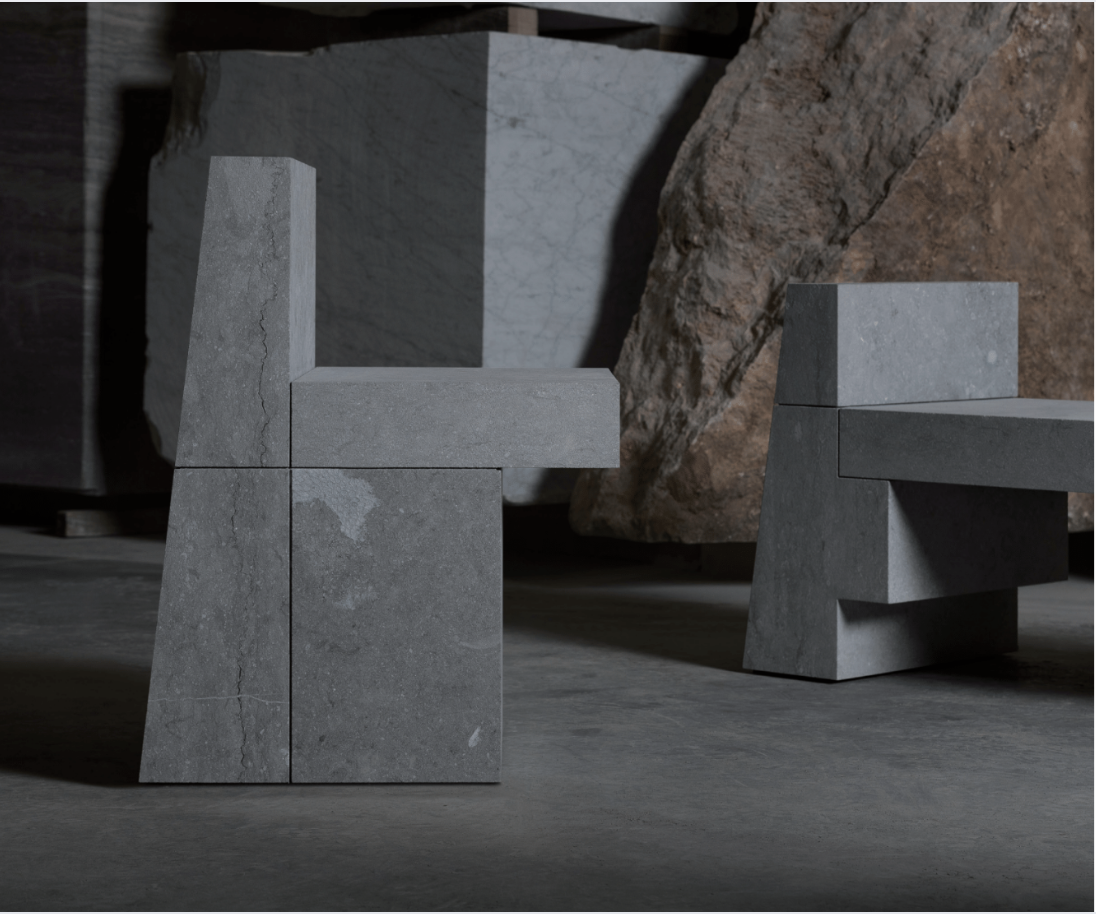
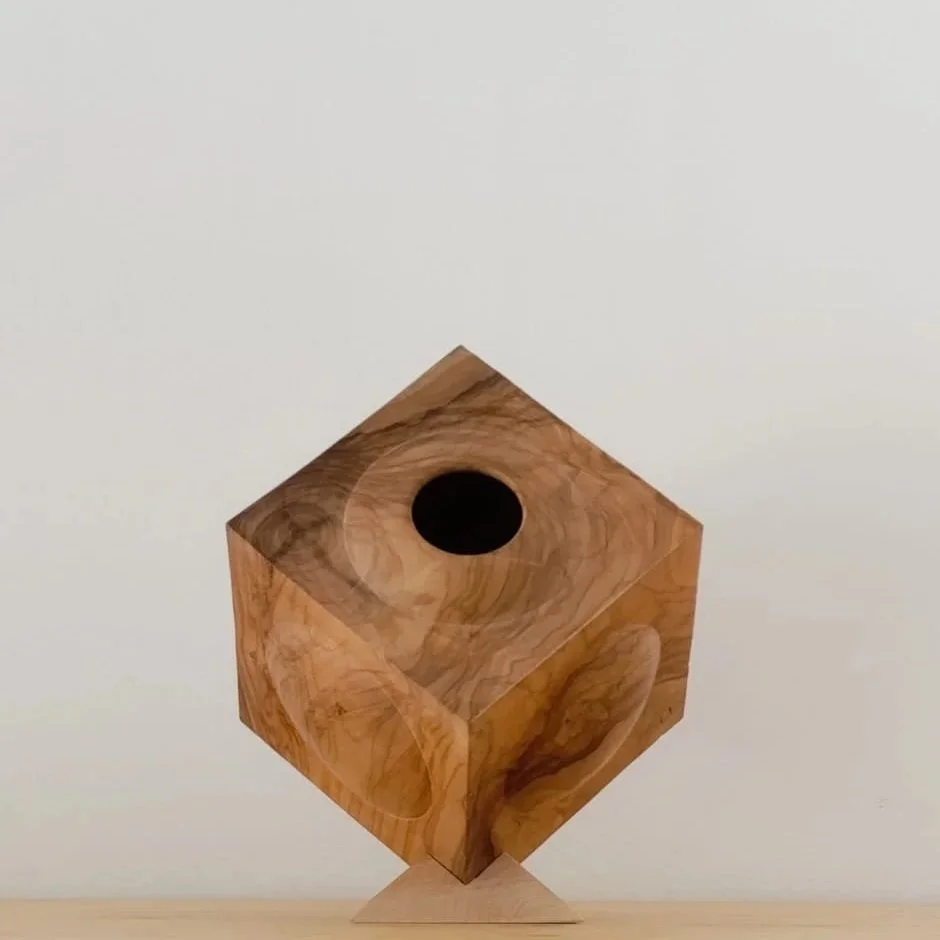
Through the works of Morevi, Majdulin Nasrallah, Ayse Habibe Kucuk, Moss Studio, Josef Gereige, Shaikha Al-Sulaiti, Ángela Ramos Garcés and studiokhachatryan, the installation explores the quiet tension between structure and fragility, opacity and reflection. Each piece embodies the essence of slow creation and tactile intelligence, revealing how form and surface respond to the shifting desert light.
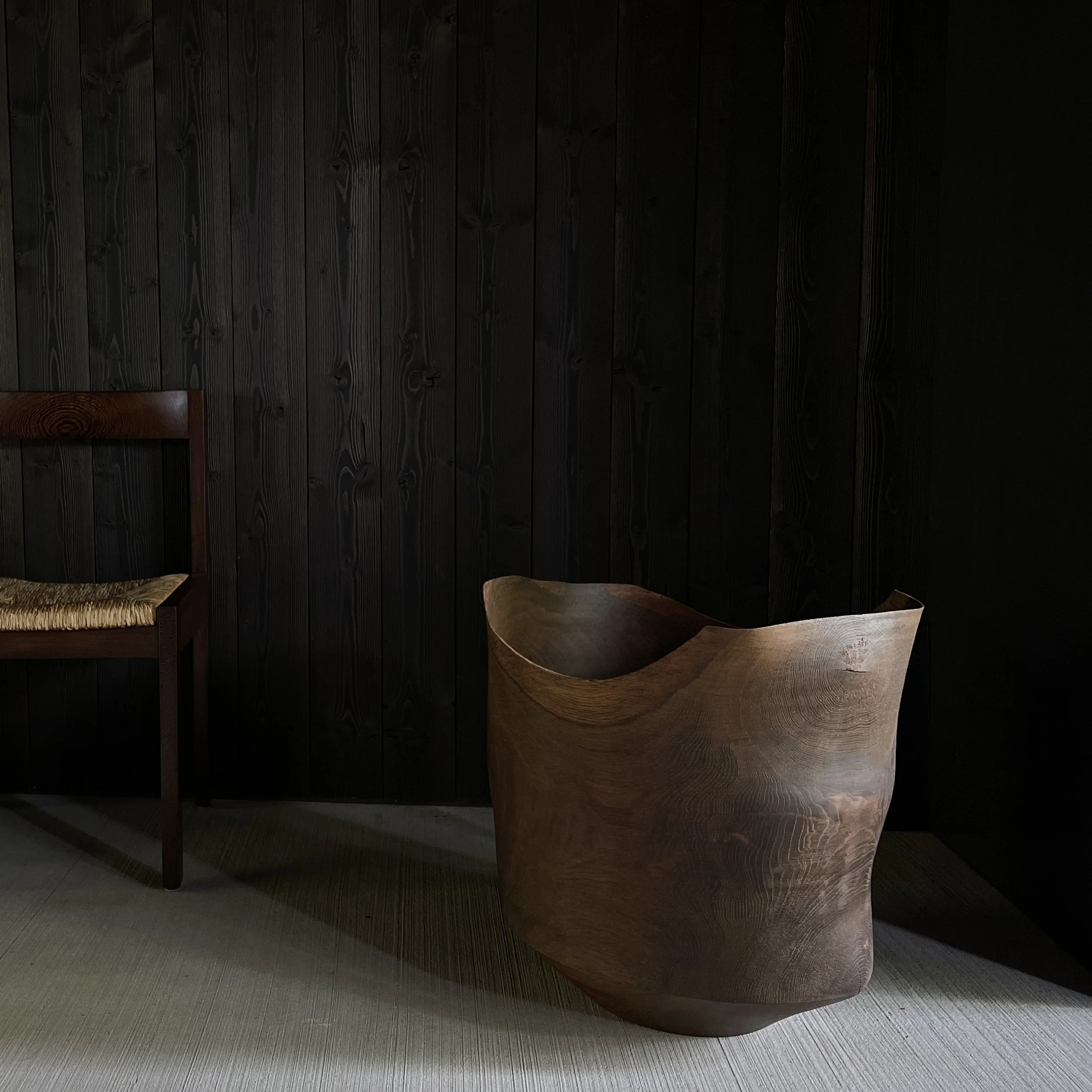
This exhibition invites reflection on how crafted objects can hold silence, capture light, and transform space into an intimate moment of contemplation. In the context of Design Doha, it invites visitors to experience the subtleties of reflection, touch, and transparency — a choreography of light and matter that speaks to the ephemeral beauty of place and presence.
On view at MIHAD Gallery in Msheireb, from 5 November 2026 to 31 January 2027, as part of the Design Doha Biennale, Qatar.
PArticipating Designers





OBJECTS

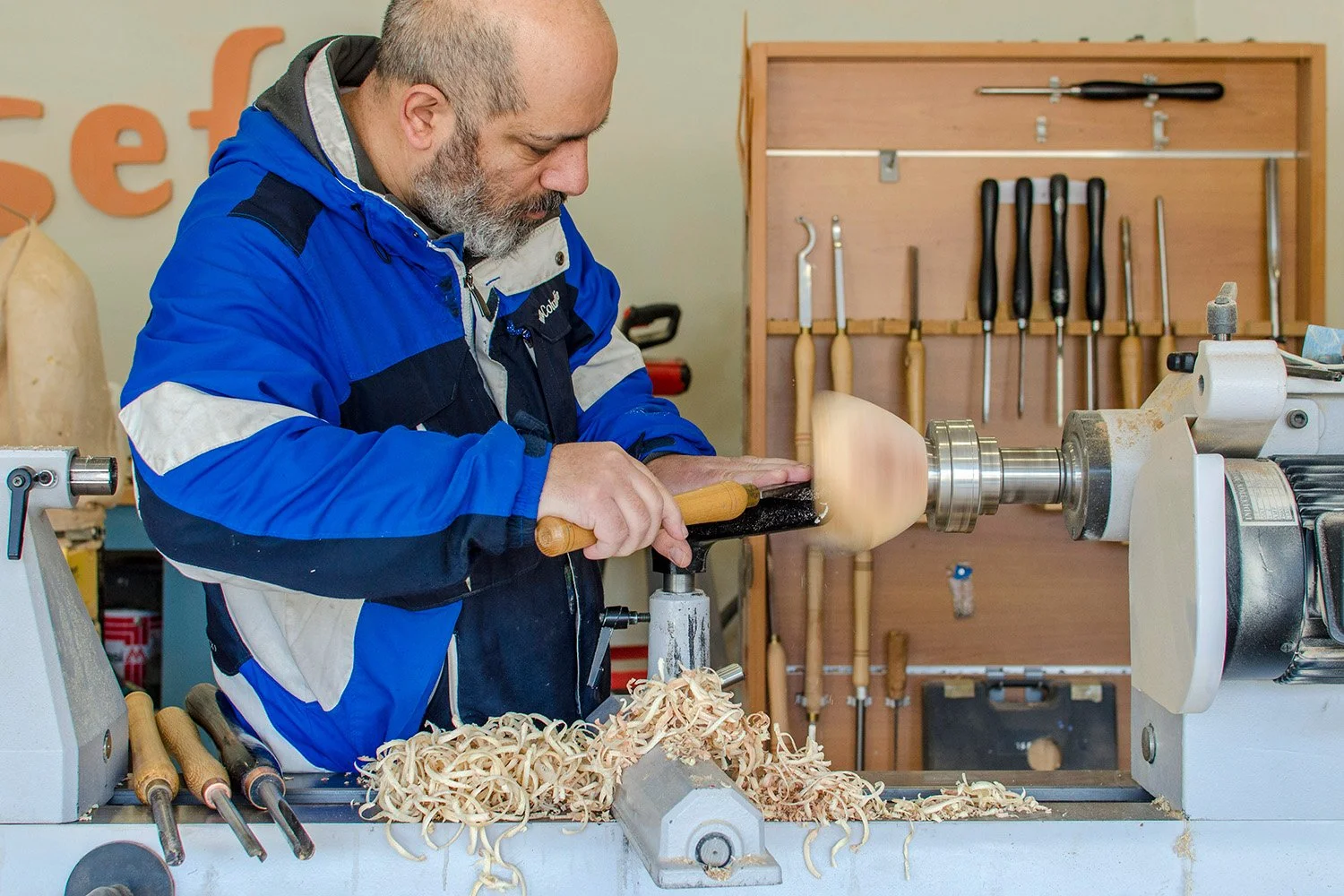
Turned on a Japanese lathe from “Mizume Sakura” (Japanese Cherry Birch), then carved by hand with chisels. Afterwards coated in multiple layers of white urushi sprinkled with “dry urushi powder” creating a stone like texture. The urushi will wear slightly with time and reveal a beautiful patina of underlying urushi powder. The shape and size are made explicitly for the use as a matcha tea bowl for tea ceremonies or private use.
Hand-made in Yamanaka Onsen, Japan

Pelu Black #4 is a small two-textured design area rug woven by hand on a traditional foot-loom from 100% hand-spun sheep wool.
All of our rugs are designed in Belgium by Hanne de Wyngaert and then spun, dyed, and handwoven by Mayan weavers in Guatemala. We strive to provide economic opportunity and celebrate indigenous tradition to create beautiful and functional products.

Blanche #1 is a braided, un-dyed, two-textured rug woven by hand on a traditional foot loom from 100% hand-spun sheep wool.
All of our rugs are designed in Belgium by Hanne de Wyngaert and then spun, dyed, and handwoven by Mayan weavers in Guatemala. We strive to provide economic opportunity and celebrate indigenous tradition to create beautiful and functional products.

A beautiful cushion cover in off-white woven by hand on a traditional foot-loom from 100% hand-spun sheep wool.
All of our products are designed in Belgium by Hanne de Wyngaert and then spun, dyed, and handwoven by Mayan weavers in Guatemala. We strive to provide economic opportunity and celebrate indigenous tradition to create beautiful and functional products.
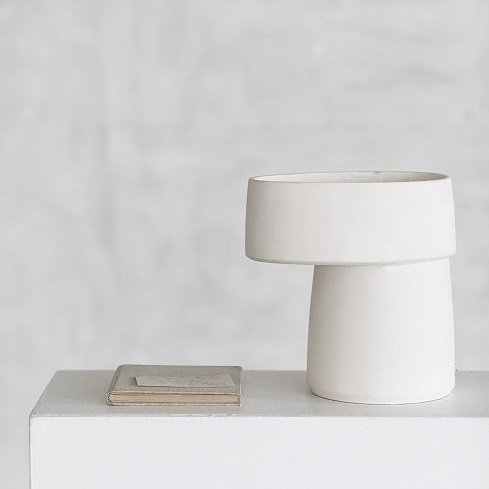
This lamp reimagines a traditional look by using ceramic exclusively, crafted entirely on a potter’s wheel. It features two conical cylinders joined seamlessly, with an oval lampshade that adds a modern twist. Alex opted for an off-white color, making it versatile for various interiors. The lamp’s minimalistic form is enhanced by a few rough textures, celebrating its handcrafted essence and giving it an elegant, natural feel that combines purity with artisanal character.

This large wooden plate was made in the style of a sweetstray for the Japanese tea ceremony. The plate is almost 25cm in diameter and was made on a Japanese lathe using local end grain Keyaki (Zelkova Wood). Endgrain creates a beautiful grain pattern and is quite rare for a plate of this size. Finished with Urushi, the natural sap of the Urushi tree, this plate is water proof and food safe.
Material: Keyaki Wood, Ki Urushi
Care Instructions: Hand wash with non-abrasive sponge and soap, food safe, store away from direct sunlight
Hand-made in Yamanaka Onsen, Japan

Small woodfired Katakuchi made during my time at Yuushin Gama, Mashiko.
Thrown on the kick wheel and later formed and decorated by hand. The decorations depict a sun surrounded by palm leaves. A common Middle Eastern theme. The name Tako Tsubo refers to the jars used to catch octopus. These jars are tied in a line and dropped to the ocean floor, giving refuge to the octopus during the night and later hoisted up with the octopus still inside.
This Katakuchi is wood-fired for over 100 hours in the back chamber. Giving it a very calm, natural effect, primarily in red and black. It is wholly unglazed and shows the melting felspar stones common in Shigaraki clays.
Material: Tokushiro Shigaraki Clay
Care Instructions: Hand wash with lukewarm water and soap, food safe, store away from direct sunlight
Hand-made in Mashiko, Japan

A small Shino Travel Chawan made in Mashiko. Its small size makes it perfect for enjoying match while travelling. simple, almost colourless. Feels great in your hands and lets the colour of the tea do all the talking.
Material: Tokushiro Clay, Shino Glaze
Technique: Hand thrown and manipulated, Woodfired
Care Instructions: Dishwasher & food safe

Marlies Huybs is a celebrated Belgian ceramicist whose work embodies a perfect harmony between form and function. Drawing inspiration from nature’s organic shapes and textures, Marlies creates timeless pieces that exude simplicity and elegance. Her craftsmanship highlights the raw beauty of natural materials, with each piece reflecting a deep respect for tradition and sustainability.

Marlies Huybs is a celebrated Belgian ceramicist whose work embodies a perfect harmony between form and function. Drawing inspiration from nature’s organic shapes and textures, Marlies creates timeless pieces that exude simplicity and elegance. Her craftsmanship highlights the raw beauty of natural materials, with each piece reflecting a deep respect for tradition and sustainability.

Turned on a Japanese lathe from “Mizume Sakura” (Japanese Cherry Birch), then carved by hand with chisels. I then applied a layer of Japanese washi paper glued to the bowl with rice paste and urushi, which was coated again with a few layers of white urushi. This results in a surface with the delicate qualities of paper, but entirely waterproof and sturdy. The shape and size are made explicitly for the use as a matcha tea bowl for tea ceremonies or private use.
Comes in a signed Japanese box
Hand-made in Yamanaka Onsen, Japan

The Yoomelingah Yure is a versatile, beautifully crafted basket. Handwoven by artisans in Ghana from sturdy elephant grass, each basket is both durable and eco-friendly. Its organic shape and earthy colors make it an eye-catching piece that combines aesthetics with a rich cultural heritage. Each purchase supports fair wages for the artisans and contributes to preserving traditional Ghanaian weaving techniques.

The Ayeratukko Basket 2 is a versatile, beautifully crafted basket. Handwoven by artisans in Ghana from sturdy elephant grass, each basket is both durable and eco-friendly. Its organic shape and earthy colors make it an eye-catching piece that combines aesthetics with a rich cultural heritage. Each purchase supports fair wages for the artisans and contributes to preserving traditional Ghanaian weaving techniques.

The Giant Waves basket is a versatile, beautifully crafted basket. Handwoven by artisans in Ghana from sturdy elephant grass, each basket is both durable and eco-friendly. Its organic shape and earthy colors make it an eye-catching piece that combines aesthetics with a rich cultural heritage. Each purchase supports fair wages for the artisans and contributes to preserving traditional Ghanaian weaving techniques.
Beautiful cups made out of Japanese Chestnut and black Urushi. Sold per piece or per set of two.
Hand-made in Yamanaka Onsen, Japan